The best silver IRA companies in 2026 for rollovers should be through approved and eligible accounts. When confidence in traditional plans starts to weaken, investors tend to look in the same direction, hard assets that exist outside the financial system.
Authored by John Davidsen, CEO of 401kgoldirarollovers.com
John Davidsen is among the most knowledgeable experts with highly specialized experience in precious metals retirement investments. In terms of specifics, he is a dedicated professional with more than 15 years in this profession.From a workflow perspective, he has earned different prestigious honors and degrees in economics/finance while being highly recognized as a dedicated advisor in self-directed Individual Retirement Accounts.
Disclaimer: The information on this page is provided for educational purposes only and does not constitute financial, investment, tax, or legal advice. Gold IRA investments involve risk, including potential loss of principal. Past performance does not guarantee future results. Consult a qualified financial advisor before making any investment decisions.
Quick Answer: The best silver Individual Retirement Account companies are GoldCo, American Hartford Gold and Birch Gold Group. They provide access to IRS-approved bullion and coins within a self-directed retirement structure. It must meet 99.9 percent purity to qualify, and its lower spot price relative to gold makes it an accessible diversification option for investors at various budget levels.
Over the last several years, we’ve seen persistent inflation, aggressive monetary expansion, and increased volatility across equities and bonds. That combination has pushed more people to explore alternative ways to protect long-term savings.
One path that continues to gain attention is holding physical precious goods inside a tax-advantaged structure. expert precious metals resources explains more about how you can take advantage of this wealth transfer.
While gold has historically dominated this space, its counterpart has quietly built a strong case of its own. It offers a different demand profile, unique price behavior, and a growing role in modern industry.
In this guide, we’re going to break everything down with precision. Not just the surface-level concepts, but the deeper mechanics that actually determine whether this strategy works in your favor.
Why This Asset Class Is Getting More Attention
There are two primary forces driving interest right now.
First is monetary policy. When central banks expand the money supply and real interest rates remain suppressed, purchasing power tends to erode. Investors begin searching for stores of value that are not tied directly to fiat currency systems.
Beyond a single-item approach, dual metal accounts give investors exposure to both safe-haven stability and industrial growth potential within a single tax-advantaged structure.
Second is industrial demand. Unlike gold, this item is heavily used in manufacturing, particularly in solar panels, electric vehicles, and electronics.
As global infrastructure continues shifting toward electrification, demand has increased in ways that are difficult to ignore.
That combination creates a dual-purpose asset. It behaves partly like a hedge and partly like a growth-driven commodity. This hybrid nature is one of the main reasons it has become more relevant in investment discussions.
Understanding the Structure (Without the Confusion)
What most people call a “metal-based retirement account” is technically a self-directed arrangement. The Internal Revenue Service does not create a separate category just for this. Instead, it allows certain alternative assets to be held inside an existing framework.
There are three important components involved:
- A custodian responsible for administration and compliance
- A dealer that enables the acquisition of physical bullion
- A secure depository where the assets are stored
Each part plays a critical role. If one piece is handled incorrectly, the entire structure can fall out of compliance.
The IRS also sets strict rules around what qualifies. Purity standards must be met, and not all coins or bars are eligible. Items considered collectibles are generally excluded, even if they contain precious metal content.
This is one of the first areas where inexperienced investors run into trouble. Buying physical products personally and attempting to place them into a structure that does not meet regulatory requirements. Everything must move through approved channels.
How the Transfer Process Works in Practice
If you already have funds in a 401(k), traditional Individual Retirement Account, or similar plan, moving those funds into a self-directed structure typically involves a rollover.
There are two main approaches.
Direct Transfer
Funds move from one custodian to another without you ever touching the money. This is the cleanest method and avoids unnecessary complications.
Indirect Transfer
Funds are sent to you first, and you are responsible for redepositing them within 60 days. Missing that deadline can trigger taxes and penalties, which is why this route is generally avoided.
Once it is funded, you work with a dealer to select eligible products. The custodian executes the purchase, and the assets are shipped to an approved storage facility.
On paper, this sounds simple. In reality, execution quality depends heavily on the firm guiding the process.
What Actually Separates High-Quality Self Directed Gold and Silver Individual Retirement Accounts
Not all organizations operate with the same level of transparency or discipline. Some focus on education and long-term relationships. Others prioritize quick sales and high margins.
From our analysis, the most important differentiators are:
1. Custodian Integration
Established relationships with reputable administrators reduce delays and errors.
2. Pricing Clarity
The difference between the spot price and what you pay can vary in particular. Transparent firms explain this upfront.
3. Storage Partnerships
Facilities like Delaware Depository and Brink’s Global Services provide insured, regulated storage options.
4. Liquidity Planning
A clear path to selling your holdings is just as important as acquiring them.
5. Reputation
Long-term track records, consistent evaluations, and regulatory standing all matter.
Leading Companies Investors Commonly Evaluate
There is no universal “perfect” provider. The right fit depends on your goals, portfolio size, and level of experience. That said, several firms consistently appear in serious discussions.
Augusta Precious Metals | Approved Gold Silver IRA Rollover Custodian Reviews
This firm is known for its education-first approach. Instead of rushing clients into transactions, they walk through macroeconomic fundamentals and explain the reasoning behind diversification.
They tend to attract investors who want clarity before making decisions.
Goldco
Goldco has built a reputation around efficiency. Their systems are designed to simplify the transfer process, which can be especially helpful for larger ones.
They are often chosen by investors who want a smoother operational experience.
American Hartford Gold For IRA Silver Investment
A major strength here is liquidity. Their buyback structure is designed to make exiting positions more straightforward, which is something many investors overlook until later.
Birch Gold Group
This company leans heavily into macroeconomic education. They often provide deeper context around inflation, currency risk, and long-term economic cycles.
That makes them appealing to investors who want a more analytical approach.
Risks That Deserve Serious Attention
Every investment has trade-offs, and this is no exception.
Price fluctuations can be more pronounced compared to gold, partly due to industrial demand cycles. Storage and administrative costs also need to be factored into long-term returns. gold firm leaders are also worth looking into if you want to spread your investments across precious goods.
Another consideration is timing. While this asset is generally liquid, market conditions can influence exit pricing.
Finally, compliance is critical. Mistakes in the transfer process can result in taxes or penalties that are entirely avoidable with proper guidance.
Why Market Timing Isn’t the Right Focus For A Gold Silver IRA
One of the most common questions we hear is whether now is the “right” moment to enter.
In reality, trying to pinpoint a perfect entry often leads to hesitation or poor decisions. A more effective approach is to focus on broader economic conditions and long-term positioning.
When inflation persists, currencies weaken, and uncertainty increases, tangible assets tend to play a larger role in diversified portfolios.
The goal is not to predict short-term movements, but to build resilience over time.
What Smart Precious Metals Investors Consider First
Experienced investors evaluating this space typically start with three core questions before selecting a provider. First, what is the total cost of entry including setup fees and minimum purchase requirements? Second, how transparent is the pricing structure and can you verify it independently? Third, what is the firms track record during different market conditions? Answering these questions upfront filters out most of the noise and narrows the field to providers that deserve serious consideration.
A disciplined screening process prevents the common mistake of choosing a firm based solely on marketing presence rather than operational substance. The firms that consistently earn strong evaluations share common traits: clear communication, reasonable fee structures, and a genuine focus on client education rather than transaction volume.
The holding advantages explained section breaks down why physical resources belong in long-term portfolios.
The Tax Layer Most People Misunderstand For The Best Silver Individual Retirement Account Rollover Company
A properly executed rollover is often described as “tax-free,” but that statement is incomplete.
It is only true when the process is handled correctly from start to finish.
The safest route is a direct custodian-to-custodian transfer. In this structure, funds move from your existing funds straight into the new self-directed accounts without ever touching your personal bank.
Once you introduce yourself into the chain, the risk increases.
If funds are sent to you first, the clock starts immediately. You have 60 days to redeposit the full amount into a qualifying one.
Miss that deadline and the IRS can treat the entire distribution as taxable income. If you’re under the age threshold, additional penalties may apply.
This is why experienced firms like Goldco and Augusta Precious Metals consistently push clients toward direct transfers. It removes unnecessary variables and keeps the process clean.
Another overlooked detail is required distributions later in life. If your holdings are primarily physical assets, you need a plan for how those distributions will be handled without forcing unfavorable liquidation.
Storage Options: What You’re Really Choosing
Storage is often presented as a simple decision, but it carries more implications than most realize. How does this type of firm work? Continue reading to find out.
Facilities like Delaware Depository and Brink’s Global Services typically offer two formats.
Segregated Storage
Your holdings are stored separately and specifically assigned to your account. The exact bars or coins you purchase remain tied directly to you.
Commingled Storage
Your assets are pooled with others of the same type and quality. You still own the equivalent amount, but not the exact same pieces.
Neither option is inherently better. The decision comes down to priorities.
Segregated storage offers precision and traceability. Commingled storage reduces cost.
Many investors assume they need full segregation, but in practice, the lower fees of pooled storage can make a meaningful difference over time, especially for smaller ones.
What Is A Silver IRA Rollover? Breaking Down the Real Cost Structure
This is where a lot of people lose money without realizing it.
Costs are rarely presented in one clear number. Instead, they are layered across several categories.
Here’s what you’re typically dealing with:
- One-time setup fee
- Annual custodian administration fee
- Storage cost charged by the depository
- Dealer markup on the physical metal
That last one is the most important.
What is IRA eligible silver? We discuss this later on but the spread between spot price and what you actually pay can vary in particular between providers. Some firms build their margins quietly into pricing rather than disclosing them directly.
Firms like American Hartford Gold tend to emphasize clearer pricing models, while Birch Gold Group often focuses on educating clients about how pricing works before any transaction is completed.
A simple rule we follow is this, if the economics of the transaction are not easy to explain, something is likely being hidden.
Eligible Products: What Actually Qualifies
Not every coin or bar can be placed inside a product.
The IRS sets specific requirements around purity and classification. Most eligible products must meet a minimum fineness of .999.
Commonly accepted examples include,
- American the metal Eagle
- Canadian the product Maple Leaf
What you want to avoid:
- Collectible coins marketed for rarity
- Numismatic products with high premiums
- Anything that derives value primarily from scarcity rather than holding content
This is a major area where inexperienced investors get taken advantage of. High-premium collectibles can dramatically reduce your effective exposure to the underlying asset.
For an account, simplicity usually wins.
Allocation Strategy: Avoiding the Common Traps
When investors first move into hard assets, there is often a strong emotional component driving the decision.
Concerns about inflation, currency stability, and market swings can push people to over-allocate.
That’s usually a mistake.
The precious metals firms have a more balanced approach which tends to perform better over time. Instead of shifting everything, many investors allocate a portion of their portfolio to materials while keeping exposure to equities and other assets.
Firms like Augusta Precious Metals often guide clients through this process with a focus on long-term balance rather than maximum conversion.
The goal is not to replace your entire portfolio. It’s to strengthen it.
Mistakes That Quietly Cost Investors Thousands
These are patterns we see repeatedly:
1. Choosing the Wrong Transfer Method
Indirect rollovers introduce risk that can be avoided entirely.
2. Ignoring Fee Compounding
Even small annual costs add up in particular over time.
3. Paying Excessive Premiums
Overpaying at the point of purchase reduces long-term upside.
4. Not Planning the Exit
Most people focus only on buying and ignore how they will eventually sell.
5. Working With the Wrong Firm
Execution errors, delays, and compliance issues often trace back to inexperienced providers.
Liquidity: Planning Before You Need It
Getting into a position is easy compared to getting out at the right time.
A strong buyback structure can make a significant difference. It ensures that when you decide to sell, the process is straightforward and pricing is competitive.
This is one area where American Hartford Gold tends to stand out, as they emphasize liquidity as part of their core offering.
Still, timing matters. Market conditions can shift quickly, and selling during a downturn can impact results.
Planning ahead gives you more control.
What Actually Drives Price Movement
Understanding what influences pricing helps you make better decisions.
Key factors include,
- Inflation and currency strength
- Interest rate policy
- Industrial demand from sectors like energy and electronics
- Supply constraints from mining output
This asset behaves differently than traditional financial instruments. It can move based on both economic growth and monetary instability.
That dual influence is part of what makes it attractive, but also more complex.
Building a Strategy That Holds Up Over Time
A well-executed rollover is not about chasing short-term gains. It’s about positioning your assets to handle different economic conditions.
That means:
- Keeping costs under control
- Maintaining liquidity
- Staying compliant with regulations
- Diversifying instead of concentrating
Organizations like Goldco and Birch Gold Group remain relevant because they focus on these fundamentals rather than short-term sales tactics.
What Is IRA Approved Silver? And What Truly Separates Top-Tier Providers
On the surface, many firms look similar. They offer the same types of accounts, work with the same depositories, and provide access to similar products.
The difference shows up in how they operate behind the scenes.
Let’s break down how the most recognized names compare in practical terms.
Augusta Precious Metals
This firm has built its reputation around education and process control. They tend to move slower, but that’s intentional.
Their approach is designed to ensure clients fully understand the reasoning behind each step before committing capital. For investors exploring digital asset diversification, our bitcoin IRA firms guide covers competing providers.
Where they stand out,
- Strong onboarding structure
- Clear communication around costs
- Focus on long-term positioning
Where to be mindful:
- The process may feel slower if you are looking for immediate execution
Goldco
Goldco is known for operational efficiency. They’ve refined the transfer process to reduce delays and simplify coordination between custodians and dealers.
Where they stand out,
- Streamlined execution
- Strong support systems
- Experience handling complex transfers
Where to be mindful:
- As with any provider, you still need to evaluate pricing carefully
American Hartford Gold
This company differentiates itself through liquidity planning. They place a strong emphasis on making sure clients can exit positions efficiently when needed.
Where they stand out:
- Buyback structure
- Pricing transparency
- Focus on flexibility
Where to be mindful:
- Always compare product pricing before committing
Birch Gold Group For Gold And Silver IRAs analysis
Birch Gold Group takes a more analytical approach. They spend time explaining macroeconomic trends and how they relate to long-term portfolio decisions.
Where they stand out:
- Strong educational focus
- Established presence
- Balanced perspective on diversification
Where to be mindful:
- The process may feel more traditional and less streamlined
Custodians: The Decision Most People Underestimate
While the dealer often gets the most attention, the custodian plays an equally critical role.
They are responsible for:
- Maintaining compliance with IRS rules
- Executing transactions
- Handling reporting requirements
- Holding assets on behalf of your plan
Well-known administrators include Equity Trust Company and STRATA Trust Company.
A strong relationship between the dealer and custodian reduces friction. When both parties are experienced in handling these transactions, the process tends to move more smoothly.
A mismatch can create delays, errors, and unnecessary complications.
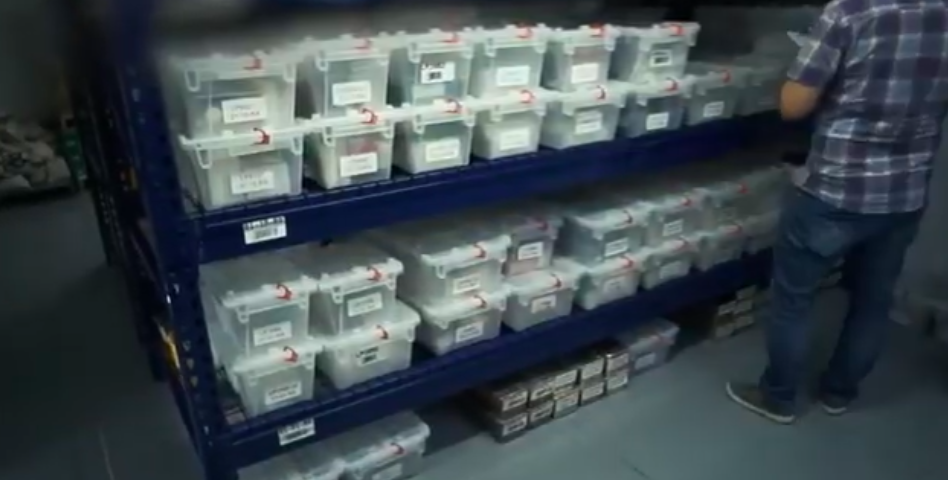 Silver Individual Retirement Account Storage
Advanced Scenarios That Require Extra Attention
Not every rollover is straightforward. Some situations introduce additional complexity.
Active Employer Plans
If your funds are still in a current employer’s plan, restrictions may apply. Some plans allow in-service distributions, but many do not.
Multiple Account Consolidation
Combining several holdings into one structure can simplify management, but requires coordination across multiple institutions.
Partial Transfers For Gold And Silver Individual Retirement Account Investment Near Me
Many investors choose to move only a portion of their holdings rather than the entire amount. This allows for diversification without fully exiting traditional assets.
Tax Strategy Adjustments
In some cases, crypto plan leaders may consider converting funds into a different tax structure before or after the rollover. This can have long-term benefits, but also immediate tax implications.
These scenarios are where experienced firms like Goldco tend to add the most value through process management.
Red Flags You Should Never Ignore
There are clear warning signs that a firm may not be aligned with your interests.
Watch for:
- Pressure to act quickly without full explanation
- Lack of transparency around pricing
- Heavy promotion of collectible or high-premium products
- Vague answers when discussing fees
- Inconsistent or concerning customer feedback
A reputable firm should be comfortable giving you time to think. If you feel rushed, that’s usually a sign to step back.
Real-world Oxford Gold Group retirement evaluation reveal patterns that marketing materials often gloss over.
How to Verify an Organization Independently
Before committing, it’s worth doing your own due diligence.
We recommend:
- Reviewing Better Business Bureau profiles
- Checking complaint history and resolution patterns
- Asking for a full written breakdown of fees
- Comparing pricing across multiple providers
Firms like Augusta Precious Metals and American Hartford Gold often perform well under this level of scrutiny, but verification should always be done personally.
How This Fits Into a Broader Retirement Plan For Gold And Silver Backed IRA Storage Requirements
This strategy works best as part of a diversified portfolio, not as a standalone solution.
A balanced allocation might include:
- Equities for growth
- Fixed income for stability
- Cash for liquidity
- Precious metals for diversification and inflation protection for silver IRA rules
The goal is not to replace everything else. It’s to create a portfolio that can handle different economic environments.
Long-Term Outlook and Positioning
Looking ahead, several trends continue to support demand:
- Expansion of renewable energy infrastructure
- Increased use in electronics and advanced technology
- Ongoing concerns around currency stability
- Geopolitical uncertainty affecting global markets
At the same time, supply constraints and mining challenges can influence availability.
This combination creates a dynamic environment that requires a long-term perspective rather than short-term speculation.
From an implementation standpoint, Check back often for more updates as we continue researching and publishing new data on custodian fee comparisons, depository standards, and regulatory developments affecting self-directed holdings of physical precious items.
Industrial Demand Drivers and Technological Applications
It’s unique physical properties, the highest electrical and thermal conductivity of any product, excellent reflectivity, and antimicrobial characteristics, create important industrial applications across multiple high-growth sectors.
the item Institute’s World the metal Survey 2024 reports that industrial fabrication now accounts for more than half of total annual demand, a share that has been steadily increasing over the past decade as new technologies expand it’s addressable market.
The fastest-growing industrial application for it is photovoltaic (solar) manufacturing, which the resource Institute estimates consumed over 150 million ounces in 2023, representing approximately 15% of total industrial demand.
Each solar panel contains approximately 20 grams of physical bullion in its electrical contacts, and with global solar installations projected to grow at 15-20% annually through 2030 according to the International Energy Agency, this demand driver is expected to increase substantially.
Other significant industrial uses include electronics and electrical components (connectors, switches, circuit boards), brazing and soldering alloys, chemical catalysts, and antimicrobial coatings for medical devices.
| Industrial Application | 2023 Est. Demand (Moz) | Growth Rate | Key Technology Trend |
|---|---|---|---|
| Photovoltaic (Solar) | 150+ | 15-20% annually | Next-gen cell efficiency |
| Electronics / Electrical | 250+ | 3-5% annually | 5G, IoT expansion |
| Brazing / Soldering | 50+ | 1-2% annually | EV battery connections |
| Catalysts (Chemical) | 45+ | 2-3% annually | Green chemistry |
| Medical / Antimicrobial | 10+ | 8-10% annually | Wound care, hospital surfaces |
Supply-Demand Dynamics in Global Silver Markets
The supply-demand dynamics of physical bullion present a distinctive market structure where above-ground inventories play a substantially larger role than annual mine production.
According to the USGS Mineral Commodity Summaries 2024, global the valuable mine production totaled approximately 25,000 metric tons in 2023, a volume that has remained relatively flat over the past five years due to declining ore grades at primary the holding mines and the closure of several major operations.
Unlike commodities that are consumed in use, the vast majority of physical bullion ever mined is still in existence in some form, creating a large available inventory that can supplement new production to meet demand.
the metal Institute reports that total above-ground the product inventories held in identifiable form (including bullion bars, coins, and exchange-traded product stockpiles) exceed 2 billion ounces.
This inventory buffer means that supply availability is less determined by current production than for commodities where stocks-to-use ratios are lower.
However, the drawdown of visible inventories in recent years, exchange-traded product holdings declined from a peak of over 1.2 billion ounces in 2020 to under 900 million ounces in 2023, has created a tighter physical market that is more sensitive to shifts in demand.
The USGS also notes that roughly 20% of global the asset supply comes from secondary recycling, providing a price-responsive source of supply that partially offsets the rigidity of primary production.
- Declining primary production, Global mine output has been flat to declining as ore grades deteriorate at existing operations and new projects face long permitting timelines.
- By-product dependency, Approximately 70% of physical bullion production occurs as a by-product of copper, lead, and zinc mining, meaning the valuable supply is not directly responsive to metal prices.
- Above-ground inventory dynamics, Total identifiable inventories are significant but have been declining, creating potential for supply tightness if industrial demand continues to grow.
- Recycling supply: Secondary supply from scrap provides 15-20% of total supply and tends to increase when prices rise, providing a partial automatic stabilizer.
- Geographic concentration: Mexico, Peru, China, and Russia together account for roughly 50% of global mine production, creating geopolitical supply risk.
- Exchange-traded product flows: ETF holdings represent a significant source of above-ground demand variation, with inflows and outflows substantially affecting market balance.
Price Drivers and Market Structure Analysis
The pricing of physical bullion is influenced by a complex combination of factors that distinguish it from other commodities.
Unlike some products that trade primarily on the basis of supply-demand fundamentals, the item has historically exhibited a dual character as both an industrial commodity and a financial asset.
This duality means its price is influenced by industrial demand trends, monetary policy expectations, currency movements, and broader market risk sentiment simultaneously.
The gold product market is primarily traded on the Chicago Mercantile Exchange (CME) through futures contracts and through the over-the-counter spot market centered in London.
The LBMA the metal Price, set daily through an electronic auction mechanism administered by the ICE Benchmark Administration, serves as the primary reference price used by custodians and dealers for settling transactions.
The CME’s futures market determines the futures curve, which provides information about market expectations for future supply-demand balance and carries implications for the economics of different holding strategies.
A 2022 analysis published in Resources Policy examined the price discovery relationship between London spot and CME futures and found that both markets contribute to price discovery, though the relative contribution shifts during periods of market stress.
| Price Driver | Direction of Impact | Time Horizon | Magnitude |
|---|---|---|---|
| Industrial Demand Growth | Positive (increases consumption) | Structural (years) | Medium |
| USD Dollar Weakness | Positive (denominator effect) | Cyclical (months-years) | Significant |
| Rising Real Rates | Negative (opportunity cost) | Cyclical (months) | Moderate |
| Supply Constraints | Positive (tightens physical) | Structural (years) | Medium |
| economic instability | Variable (mixed historical) | Short-term (weeks) | High |
| ETF Flows | Positive (inventory demand) | Medium-term (months) | Significant |
Due Diligence Checklist for Comparing Service Providers
Comparing service providers that enable acquisition and custody of tangible assets requires a systematic approach that goes beyond comparing headline fee numbers.
The CFA Institute’s handbook on manager selection and due diligence provides a framework that can be adapted for evaluating firms in this sector, focusing on organization and business risk, investment process, operational due diligence, and terms and conditions.
The following checklist synthesizes recommendations from the SEC, FINRA, the CFA Institute, and the Better Business Bureau into a practical evaluation framework.
Applying this checklist consistently across all providers under consideration ensures that comparisons are made on a complete and apples-to-apples basis, reducing the risk of overlooking important differences between similar-seeming offerings.
- Organization and stability: How long has the firm been operating, what is its ownership structure, and does it have sufficient capitalization to meet its obligations?
- Regulatory and licensing status, Confirm registration with the SEC, state securities regulators, or applicable federal agency using IAPD and BrokerCheck databases.
- Fee structure completeness, Obtain a complete, itemized fee schedule covering setup, annual administration, transaction, storage, and termination fees.
- Product availability and pricing, Request a detailed product list with current pricing, including premiums over spot and minimum order quantities.
- Storage and insurance verification: Confirm the specific depository used, its accreditation status, and the details of its insurance coverage.
- Buyback and liquidity policy, Understand the exact buyback process, pricing methodology, processing timeline, and any restrictions or penalties on liquidation.
- Client service assessment, Evaluate responsiveness, clarity of communication, and willingness to provide transparent answers to all questions during the evaluation process.
- Check back often for more updates on due diligence methodologies and provider comparison frameworks.
From a planning standpoint, Bookmark this guide and check back often as we continue updating these resources with the latest industry developments and institution information.
Keep exploring: Read our gold IRA investment process guide, learn about gold IRA basics, or read our breakdown of Patriot Gold Group retirement evaluation for more information to help with your decision.
The white mineral presents distinct investment characteristics within a tax-advantaged structure. Over the 20-year period ending 2024, it delivered an annualized return of approximately 7.8%, below the yellow mineral’s 9.6% but with higher volatility, roughly 1.5 to 2 times the price swings of its counterpart. Industrial demand drives approximately 50% of global consumption, with solar panel manufacturing alone using approximately 161 million ounces in 2024. This dual demand source, investment and industrial, creates price dynamics that diverge from the yellow mineral’s more monetary-driven behavior.
Under Internal Revenue Code Section 408(m)(3), the white counterpart requires 99.9% fineness (0.999) for arrangement eligibility. The American Silver Eagle qualifies through a specific statutory exemption despite being 99.9% fine, it is one of only a few coins explicitly named in the tax code. Other approved options include the Canadian Silver Maple Leaf (99.99%), British Silver Britannia (99.99% post-2013), and the America the Beautiful 5-ounce silver quarter series. Bars must meet the 99.9% threshold and carry assay certification from a COMEX-approved or LBMA-accredited refiner, with common sizes including 1 ounce, 10 ounce, and 100 ounce formats.
For the 2026 tax year, the SECURE 2.0 Act increased the contribution ceiling to $7,500, with an additional $1,100 catch-up for those aged 50 and over. Storage costs at approved depositories typically run $80 to $150 annually for segregated arrangements, where specific bars and coins are tracked by serial number. The white metal’s lower per-unit value compared to the yellow mineral means a $50,000 allocation may require substantially more storage space, potentially affecting depository fees. The Commodity Futures Trading Commission has taken enforcement actions against firms deceptively marketing the white mineral to elderly investors, including cases involving overpriced numismatic products sold at 30% to 50% above melt value.
Final Perspective
At this level, success comes down to execution.
Not hype. Not timing the market perfectly. Execution.
The right approach focuses on,
- Keeping costs under control
- Maintaining flexibility
- Staying compliant
- Working with experienced providers
Firms like Birch Gold Group, Goldco, Augusta Precious Metals, and American Hartford Gold continue to be part of the conversation because they consistently operate within these fundamentals.
But the final decision on the best silver IRA roll over companies evaluation should always be based on your situation, your goals, and your understanding of the process.
If you’ve read through all three parts, you now have a clear framework to move forward without guessing.
And in a financial environment where uncertainty is constant, clarity is one of the most valuable assets you can have.